RESEARCH & SIMULATIONS
The Lynkorr Project includes a pre-empirical mechanical research program: analytical relations, reduced computational models, sensitivity tests and experimentally testable predictions. These models are used to make the consequences of different movement organizations explicit enough to be challenged.
Scientific status: these results are reduced-model and computational evidence. They do not constitute human biomechanical validation, clinical evidence, injury-prevention proof or physiological proof. The decisive next step is measurement on real dancers.
01 — FORCE-ENTRY HEIGHT & SUPPORT RESERVE

Figure C2 — Same general demand, different force-entry height.
02 — PASSIVE FREE-LEG OPENING & STEP REVISABILITY

Figure C4b — Passive 3-D free-foot opening emerges from leg mechanics.
03 — CONTINUITY THROUGH TRANSFER
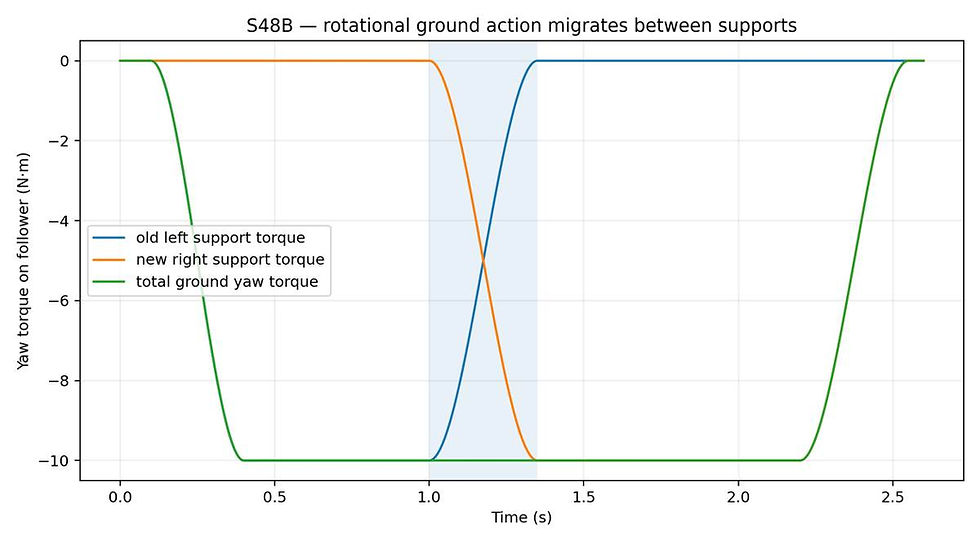
Figure C5 — Old-support action fades while new-support action rises.
04 — ROTATIONAL STANDING-SUPPORT ACTION

Figure C6a — Corrected Lynkorr heel-to-toe rotational ground action.
05 — PARTNER FORCE ROUTING & FOLLOWER AUTONOMY
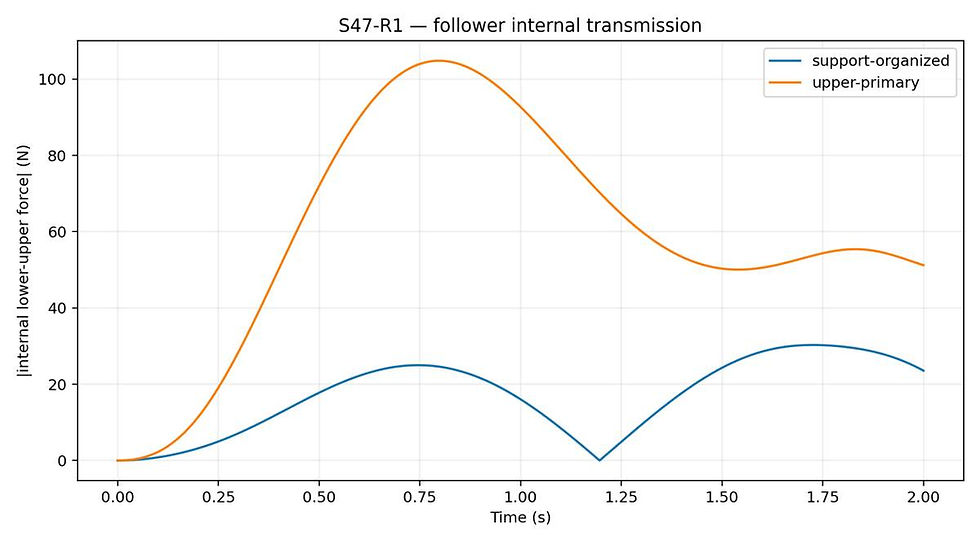
Figure C7 — Internal follower transmission in the exact-task two-dancer model.
06 — BREATHING & INTERNAL ORGANIZATION

Figure C8 — Inhale preparation and exhale release surrogate.
WHAT COMES NEXT
The current research program is deliberately falsifiable. The next evidence level is human measurement under matched movement conditions using force plates, plantar-pressure measurement, motion capture, interface-force measurement and EMG where the claim requires it. Lynkorr should be able to change when measurement contradicts an explanation.
VIDEO RESEARCH
This section brings together technical demonstrations, workshop footage, movement comparisons, explanations and interviews/live research as a growing record of Lynkorr in practice.
TECHNICAL DEMONSTRATIONS
FROM CLASS MATERIAL TO SHARED MOVEMENT
A class demonstration examining how movement is organized through support, transfer, timing and partner response.